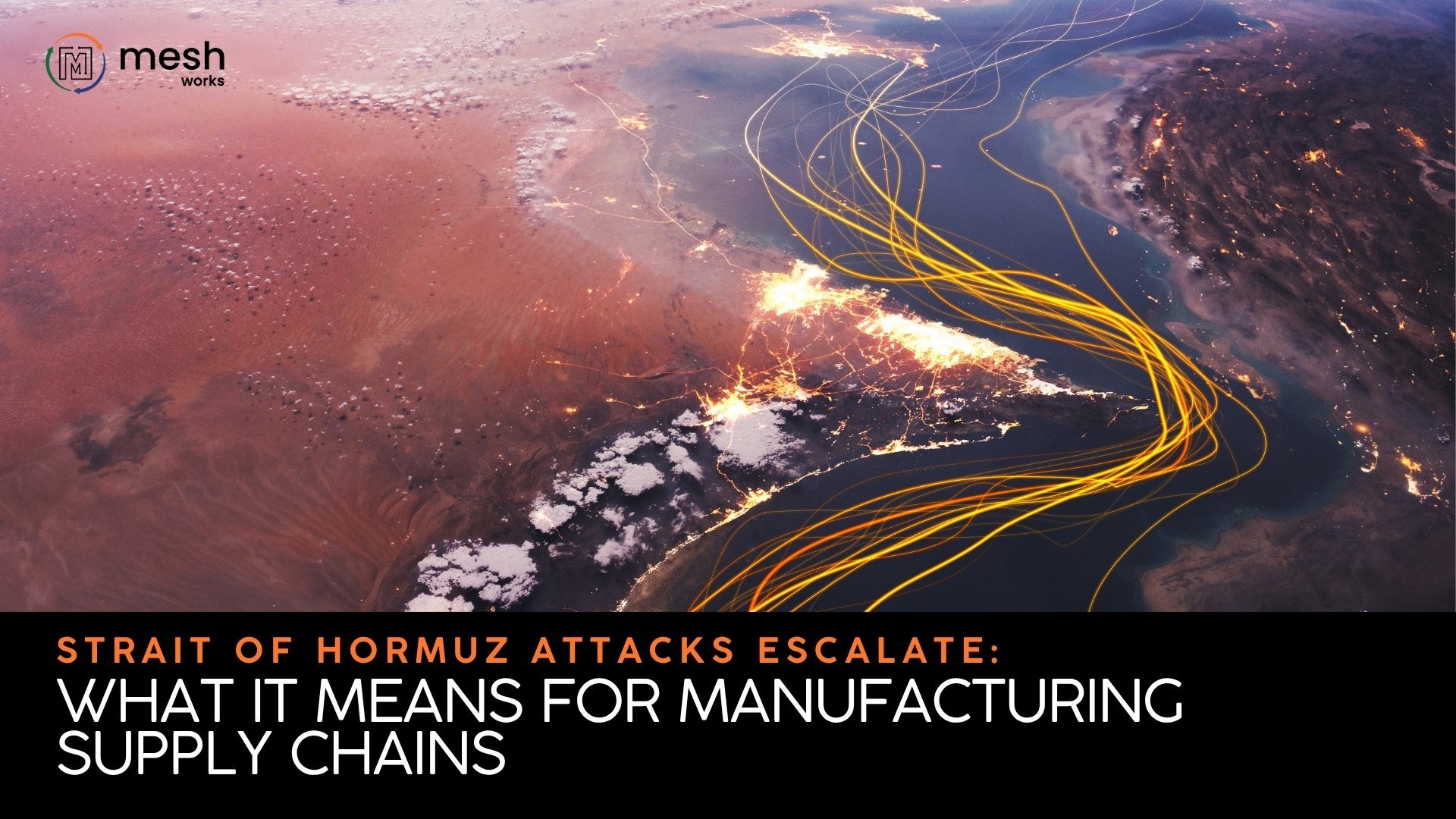
The Strait of Hormuz remains the biggest single disruption to global supply chains in 2026, and October has been one of its most dangerous months yet.
What happened this week
On Tuesday, October 13, the Singapore-registered container ship GFS Pride was attacked while transiting the strait. It caught fire, but all crew were evacuated and no injuries were reported, according to Singapore's Maritime and Port Authority. The vessel later sank, with all 21 crew safely evacuated. A second Singapore-registered container ship, the GFS Giselle, was hit by an unidentified projectile the next day. Its hull was damaged, but it reached safe anchorage with no crew injuries.
The attacks were not isolated. Maritime officials said a dry bulk carrier also sank near the strait within the same 24 hours after being hit by a projectile. At least six vessels were struck on Sunday, October 11 alone, and UK Maritime Trade Operations (UKMTO) has since issued four more verified attack warnings for incidents on October 13. UKMTO incident reports show more than 20 vessels, mostly oil tankers, attacked this month across Hormuz, the Persian Gulf and the Gulf of Oman. According to the International Maritime Organization, GFS Pride is the third commercial ship sunk during the Iran war.
Iran has claimed, without evidence, that the ship struck a naval mine.
Why it matters: the threat now covers all cargo
The key shift for manufacturers is that the risk is no longer limited to oil. Maritime risk firm MARISKS warned that container vessels and bulk carriers are also sustaining serious damage, not just tankers. That puts finished goods, components and bulk raw materials at direct risk.
The timing is significant. Iran has stepped up strikes in recent weeks as it tries to choke off a rebound in crude exports through the strait. Those exports had returned to prewar levels in September, but total Middle East shipments, including pipelines, were still nearly 20% below prewar levels.
What it is doing to costs
- Container freight: Rates have surged more than 330% since the crisis began. Benchmarking platform Xeneta believes the spike has peaked but expects rates to ease gradually rather than collapse.
- Oil tankers: Poten data puts very large crude carrier rates at around $1.3 million per day, about 43 times the early-January level on the benchmark Gulf-to-Far East route. Higher fuel costs then show up in every other freight bill.
- Raw materials: Gulf aluminum smelter output is still well below prewar levels. Low exchange inventories and high regional premiums point to a real physical shortage, even though Chinese and Indonesian exports are filling part of the gap.
Why India is directly in the picture
The strait carries about 20% of global oil supply but only 2–3% of container volumes. Its importance to India goes beyond energy. Many routes that avoid Hormuz now rely on transshipment through west coast Indian ports, feeder services into Oman and the UAE, and overland trucking into Gulf markets. That brings opportunity for Indian logistics hubs, but also congestion and capacity pressure for manufacturers using the same ports.
What procurement and sourcing teams should do now
1. Map your Gulf exposure. Identify every supplier, material and shipping lane that touches the Gulf, including indirect exposure through fuel, aluminum and petrochemical inputs.
2. Qualify backup suppliers before you need them. With attacks escalating, building a list of alternate suppliers in other regions is cheaper now than during a shortage.
3. Budget for higher costs into 2027. Even if rates ease, war-risk insurance, surcharges and longer routes will keep landed costs elevated.
4. Build in lead-time buffers. Rerouting and port congestion mean transit times are harder to predict. Add safety stock for critical parts.
5. Track supplier risk continuously. Static supplier lists go out of date fast in a crisis. Real-time visibility into supplier capacity and location risk is now a core procurement need.
Disruptions like Hormuz show why supplier qualification and diversification can't be one-off projects. MESH Works helps manufacturers discover, qualify and manage verified suppliers across regions, so sourcing teams can shift volume quickly when a route or region becomes unsafe.