REDUCE WASTE & INCREASE RESULTS
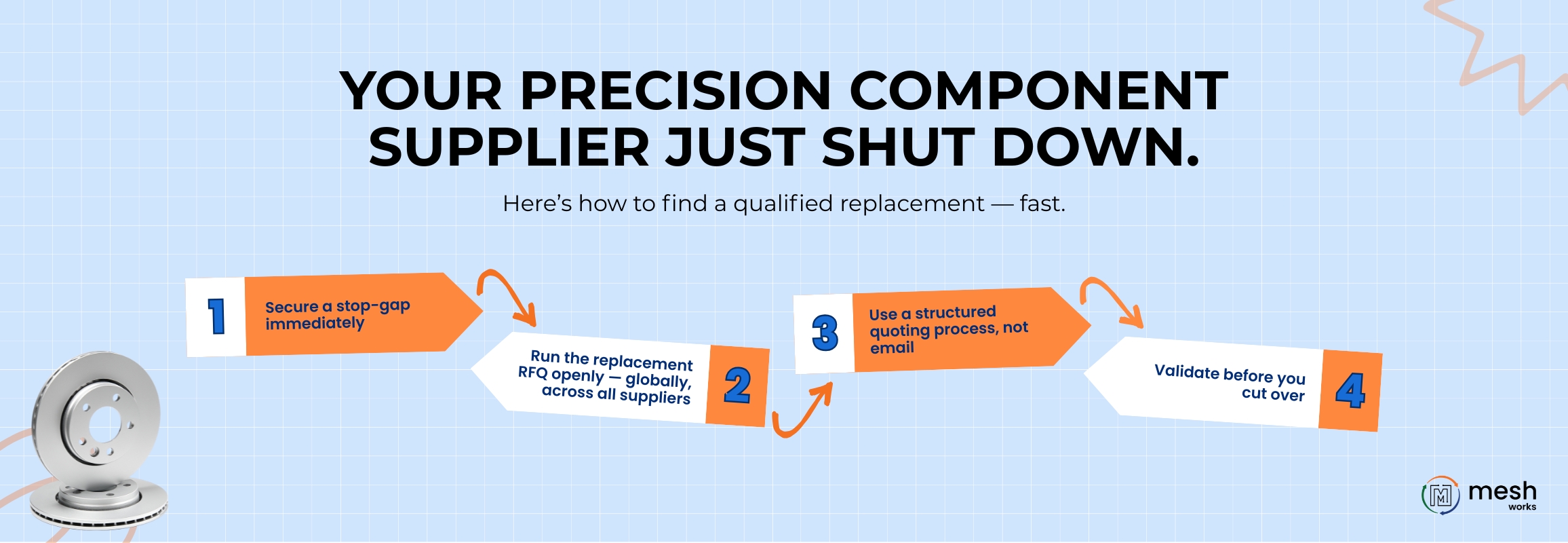
The pandemic has taught us many important business lessons. One of the most important lessons it taught us was understanding supplier relationships to get what you need—when needed. Many companies were shortchanged when they found their off-shore suppliers could not deliver. Things might have been different if they had a Supplier Relationship Management (SRM) in place to quickly source other local and qualified suppliers.
Does that seem a bit too simple? Maybe. But it can be pretty simple if you have adopted a way to manage your suppliers cohesively, comprehensively, and collaboratively.
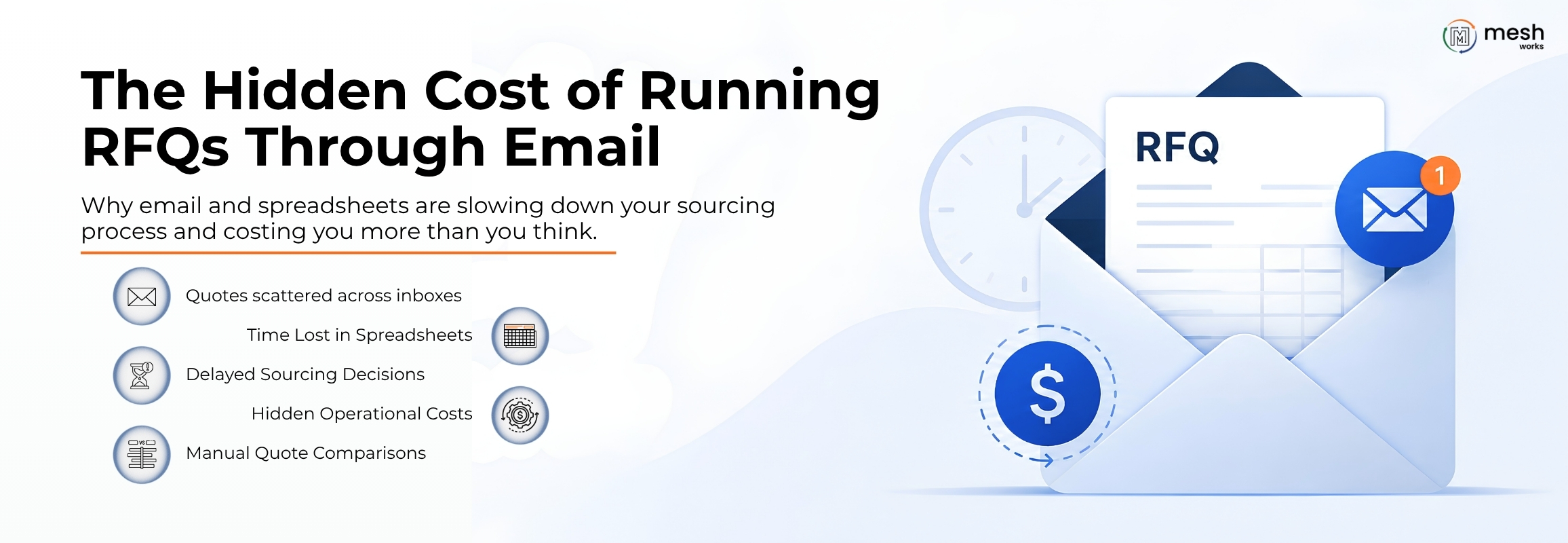
From experience, we know that many companies, unfortunately, have their supplier information scattered in various spreadsheets, online shared documents, and the inevitable folders in Outlook. A system like this doesn’t communicate with other team members, track performance and RFQs, or is easily taught or explained to the newcomer on the procurement team. Today’s supplier management systems (SRM) solve this problem in easy-to-use online cloud-based systems, making them accessible as your company grows. These systems put your supplier information into a database, making it usable to all team members. These systems mean that companies big and small can now manage their RFQs, update supplier capabilities, and track progress from one online portal. If your company hasn’t sent out an RFQ lately, it’s most likely symptomatic of a more significant problem that can easily be resolved with a cloud-based system.
 THE BASICS OF SRM
Qualifications, certifications, and experience in particular industries – make sourcing much harder. For example, if you are in the aerospace industry, there are industry certifications, requirements, and required experience that are uncommon in other industries. Let’s face it: making parts for planes differs greatly from manufacturing parts for many other industries. An SRM system improves buyer-supplier communication, increases collaboration with team members, and streamlines the entire process. Most companies adopting an SRM note that they can reduce their sourcing staff, as they no longer chase down information stored in too many places and instead focus on the task at hand.
 COMMUNICATION IS KEY
Over time, a long-term relationship between your company and its suppliers allows for exchanging ideas and information. This creates a partnership between the buyers and sellers that has been proven to result in better pricing and faster, on-time deliveries. Using a cloud-based system, all communication from the buyer to the supplier is kept current, tracked, and traced to the project award. Supplier updates are easily added so that everything is current. Searching for suppliers with particular certifications or experience is quick and easy. A single portal streamlines the process and makes it easy to ensure you are asking for the same thing from the companies you are sourcing. It also keeps history intact for future searches. In this environment where staffing is short, SRM is the essential central portal for new members to easily see what has happened in the past and where RFQs currently stand.
RISK MANAGEMENT
It’s not uncommon for Tier 1 suppliers to require that their data be protected and for you to explain how you are managing security to minimize risk. An online secured cloud-based system is ideal and a far cry from spreadsheets evenly distributed everywhere! If your suppliers have not asked you about this, expect to be asked soon, as risk management is an extremely hot topic.
REAL-TIME REPORTING
Many problems are associated with storing important data on spreadsheets and individual hard drives. One of the biggest challenges it presents is the inability to measure results. All manufacturing companies, for years, have adopted ERP systems to manage their production and CRM systems to manage sales and marketing initiatives. SRM is a way to manage your procurement initiatives in a quantifiable fashion adequately. With SRM, an owner can easily request reports detailing RFQs, awarded projects, parts costs and deliveries, and new global sources. Finally, a system that not only helps the purchasing and sourcing department but is also one that can be measured.
BOTTOM LINE SAVINGS
While I’ve discussed better communication, real-time reporting, reducing risks, and labor savings, there are many other measurable positive results from SRM. Reducing part costs by thoroughly conducting supplier searches is probably the one area most purchasing professionals report. They also mention minimizing pricing volatility because they have already sourced local and alternative sources. With the increased efficiency, they speak to reducing their purchasing staff as the SRM does so much of the heavy lifting. They also talk about SRM as a continuous improvement of operations. Today’s purchasing managers are under tremendous pressure to source more experienced local suppliers that can provide timely parts while reducing part costs. What has often been perceived as a ‘no-win’ situation turns into a ‘win-win’ environment for them and their qualified suppliers because of SRM.
A pump or valve you are sourcing for a particular application might have an application to a different customer. Having this data with drawings, specifications, and pricing would be helpful to the engineering staff that is looking to outsource this system. SRM can be integrated into their system to enhance their ability to develop systems. Because SRM has uses across a manufacturing facility, it can be integrated into an ERP for plant-wide communication and collaboration.
Lean manufacturing principles teach us to identify waste with a manufacturing system to maximize productivity. Searching for information stored in various systems is an easily identifiable waste of time. Eliminating that waste with an SRM system that adds value is the true definition of being Lean.
Using SRM will do more than track RFQs across all teams. It has been proven to source better suppliers to meet JIT demands at lower costs. The lower costs of SRM systems are also reducing the need to add purchasing staff.
The easiest way to reduce part costs and increase on-time part deliveries on time is with SRM.
Learn more about how MESH can support your digital SRM transformation here.
Originally featured in Simple Solutions That Work, Fall 2023