Quality engineers ensure that their organizations’ products and services meet the highest standards. One of the most effective approaches to achieving this goal is the Advanced Product Quality Planning (APQP) methodology. When paired with a robust Quality Management System (QMS), like MESH QMS, quality engineers can take their processes to new heights of excellence. Let’s explore the importance of APQP and how MESH QMS can help improve quality engineering processes.
The Significance of APQP
APQP is a structured framework designed to guide organizations through developing and launching high-quality products. Its importance cannot be overstated, as it facilitates a proactive approach to quality management, reduces the risk of defects, and enhances customer satisfaction. APQP focuses on the following key aspects:
Planning: Proper planning is the cornerstone of quality. APQP helps identify customer requirements, establish clear objectives, and define the necessary resources for successful project execution.
Product Design: Ensuring the product is designed with quality in mind from the outset is critical. APQP encourages cross-functional teams to collaborate and design manufacturable, reliable products that meet customer expectations.
Process Design: APQP emphasizes process validation, aiming to eliminate variability and defects during production. It helps develop robust processes and control plans integral to consistent quality.
Risk Assessment: By assessing risks upfront, organizations can proactively mitigate potential issues, reducing the likelihood of costly recalls, customer complaints, and warranty claims.
Continuous Improvement: APQP promotes a culture of continuous improvement, emphasizing the importance of feedback loops, monitoring, and corrective actions to ensure that products and processes are continuously refined.
 The Role of MESH QMS
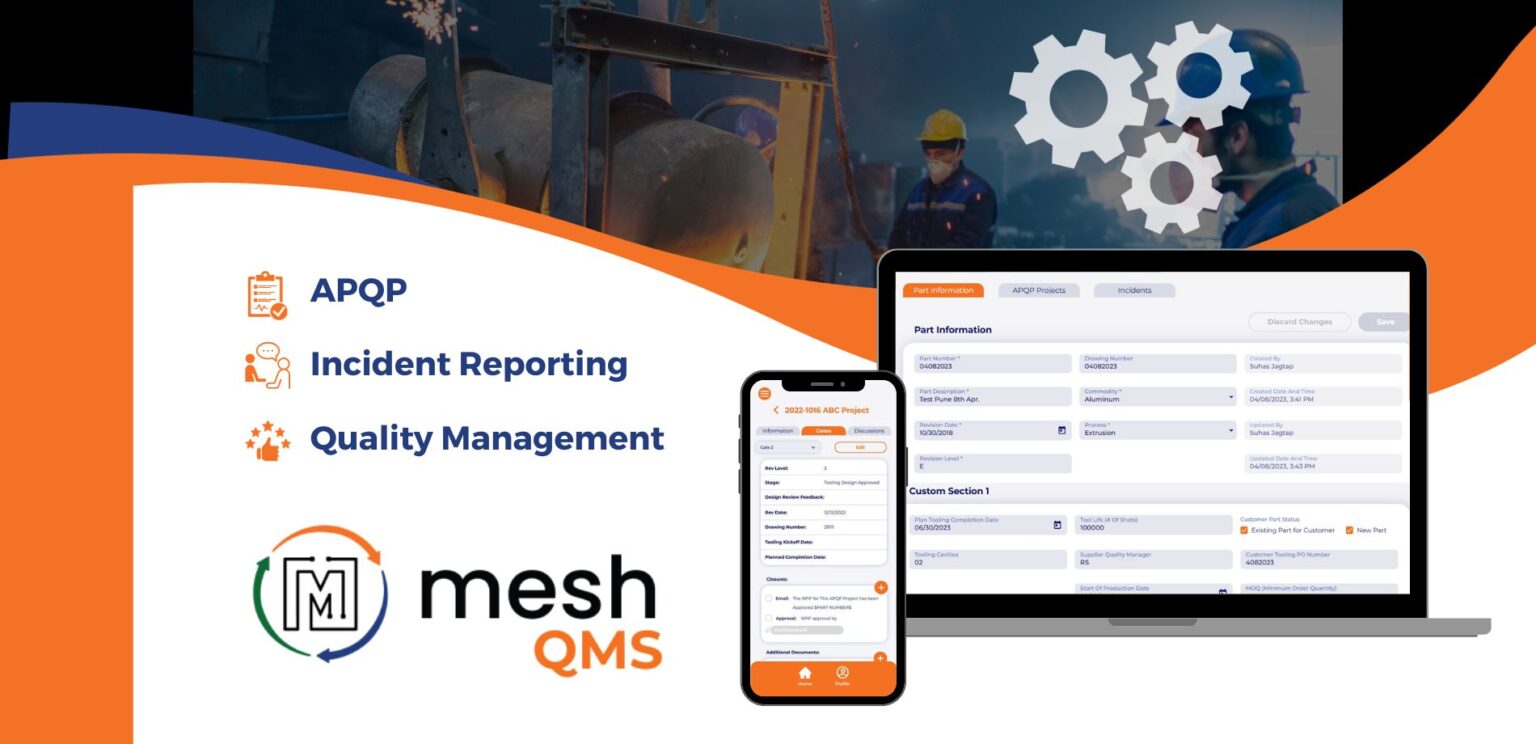
MESH QMS, a modern Quality Management System, compliments APQP by offering the following benefits:
Document Control: MESH QMS provides a centralized repository for all documents related to quality, ensuring version control and easy access to critical information. This aids in maintaining clear and consistent documentation as required by the APQP guidelines and customer audits.
Process Automation: Automation of routine tasks, such as document approvals and audit scheduling, reduces the risk of errors and streamlines quality processes, saving time and resources.
Data Analysis: MESH QMS collects and analyzes data to identify trends, track performance metrics, and provide valuable insights for making data-driven decisions. This aligns with the APQP principle of continuous improvement.
Non-Conformance Management: Easily track and manage non-conformances and deviations from established standards or processes, helping resolve issues promptly and prevent recurrence.
Auditing and Compliance: MESH QMS supports internal and external audits, ensuring organizations comply with industry standards and regulations, a key component of APQP’s risk assessment process.
Collaboration: The platform fosters collaboration among cross-functional teams, allowing real-time sharing of information and facilitating effective communication, a central theme of APQP.
Supplier Management: APQP involves working closely with suppliers to ensure quality throughout the supply chain. MESH QMS provides tools for supplier evaluation, performance monitoring, and collaboration.
Conclusion
Integrating APQP and MESH QMS can be a game-changer for quality engineers and their organizations. APQP’s structured approach to quality planning and continuous improvement aligns perfectly with the capabilities of MESH QMS, which provides the tools and infrastructure to streamline and enhance quality engineering processes.
By implementing MESH QMS and APQP, quality engineers can reduce defects, ensure compliance with industry standards, enhance collaboration, and establish a quality culture within their organizations. This combination is a powerful formula for achieving and maintaining exceptional product and service quality.
Remember, in the industry of quality engineering, excellence and customer satisfaction is a continuous journey, and MESH QMS can be your trusted SaaS companion along the way.