
Procurement Leaders Can See Spend. They Can’t See What’s Actually Happening
Most procurement organizations have visibility into spend, purchase orders, and supplier performance metrics. What they often lack is visibility into supplier conversations, sourcing activity, and RFQ participation while sourcing projects are still in progress. This visibility gap can slow decision-making, increase sourcing risk, and make supplier engagement difficult to manage at scale.
Ask most procurement leaders:
How much did we spend last quarter?
Who are our largest suppliers?
Which categories increased in cost?
How many purchase orders were issued?
Most can answer those questions quickly.
Now ask a different set of questions:
Which suppliers are actively participating in current RFQs?
Which suppliers are slow to respond?
Which sourcing projects are behind schedule?
Which suppliers are asking the most questions?
Which buyers are struggling to get supplier engagement?
That’s where things get much harder.
The reality is that most procurement organizations have visibility into the results of sourcing activities, but very little visibility into the sourcing process itself.
And that’s creating a growing problem.
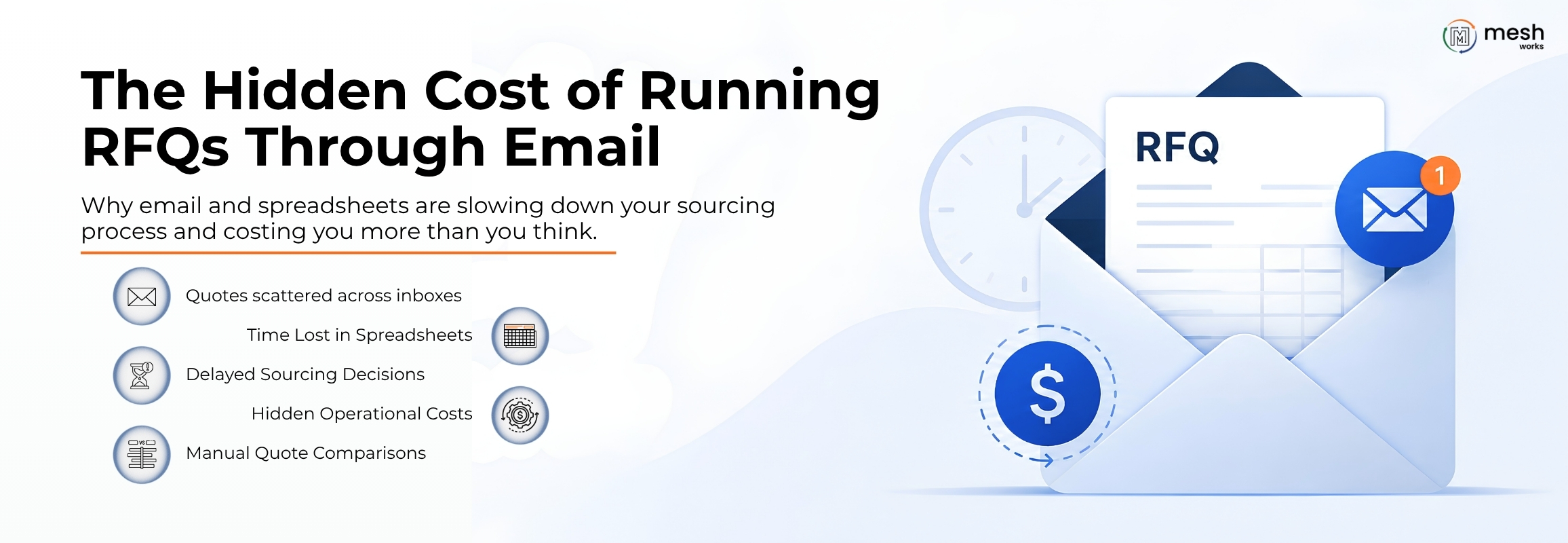
Most Supplier Communication Still Happens Through Email
For all the investments companies have made in ERP systems, analytics platforms, procurement software, and supplier portals, one critical process still happens primarily through email.
Supplier communication.
A typical sourcing event often looks like this:
➜ A buyer creates an RFQ.
➜ The RFQ is emailed to suppliers.
➜ Suppliers respond with questions.
➜ Engineers provide clarification.
➜ Suppliers send updated quotes.
➜ Buyers send reminders.
➜ Suppliers submit revised pricing.
➜ Managers occasionally ask for status updates.
➜ Before long, dozens of emails exist across multiple inboxes.
➜ Every supplier interaction is happening somewhere.
➜ The problem is that nobody has a complete picture.
The Visibility Gap Most Organizations Don’t Realize Exists
Many procurement leaders assume they have visibility because they receive reports.
But reports only show what has already happened.
They don’t show what’s currently happening.
For example:
A sourcing manager may know:
Total annual spend
Supplier performance metrics
Purchase order history
But they often don’t know:
Which RFQs are actively waiting for supplier responses
Which suppliers have gone silent
Which sourcing projects are at risk of missing deadlines
Which buyers are spending hours chasing suppliers
That information typically lives inside email threads.
And email doesn’t scale.
Why Supplier Conversations Matter More Than Most Teams Realize
Most sourcing issues don’t appear suddenly.
They show warning signs first.
A supplier takes longer than usual to respond.
Questions start coming in from multiple people.
A supplier misses an RFQ deadline.
A supplier stops participating altogether.
These signals often appear weeks before a sourcing issue becomes visible in reports.
But because communication is fragmented across inboxes, those signals are easy to miss.
By the time leadership becomes aware of a problem, it has usually already impacted timelines, supplier selection, or project costs.
Procurement Teams Are Managing Communication, Not Just Sourcing
One of the biggest misconceptions in procurement is that buyers spend most of their time evaluating suppliers.
In reality, much of their time is spent managing communication.
Following up.
Sending reminders.
Tracking responses.
Downloading attachments.
Updating spreadsheets.
Confirming participation.
Sharing information internally.
As sourcing volumes increase, communication management becomes a larger and larger percentage of the job.
The result is that highly skilled procurement professionals spend less time making strategic decisions and more time acting as project coordinators.
The Problem Gets Worse as Organizations Grow
The challenge becomes even more significant for organizations operating across:
Multiple facilities
Multiple sourcing teams
Multiple business units
Multiple geographies
One plant may be sourcing a fabricated component.
Another may be sourcing castings.
A third may be sourcing electronics.
Each team develops its own process.
Each buyer maintains their own supplier relationships.
Each sourcing event generates its own collection of emails.
Eventually leadership loses visibility entirely.
Not because information doesn’t exist.
But because it’s scattered everywhere.
What Procurement Visibility Should Actually Look Like
Imagine being able to instantly answer:
How many RFQs are active today?
Which suppliers signed NDAs?
Which suppliers have submitted quotes?
Which sourcing projects require attention?
Without opening a single email.
Without scheduling a status meeting.
Without asking buyers for updates.
That is what true procurement visibility looks like.
Not another dashboard showing historical spend.
Real-time visibility into sourcing activity while it is happening.
Why Visibility Is Becoming a Competitive Advantage
The best procurement organizations are shifting away from managing sourcing activities through email.
Instead, they are creating centralized workflows where supplier communication, RFQs, documentation, participation status, and quote activity exist in a single location.
➜ This creates benefits beyond efficiency.
➜ It creates intelligence.
➜ Leaders can identify bottlenecks sooner.
➜ Managers can support buyers more effectively.
➜ Teams can collaborate more easily.
➜ Supplier engagement becomes measurable.
➜ And sourcing risks become visible before they become problems.
The Future of Procurement Is Visibility
For years, procurement technology focused on transactions.
Purchase orders.
Invoices.
Spend analytics.
Supplier scorecards.
Those tools remain important.
But the next frontier is visibility into supplier engagement and sourcing activity itself.
Because procurement leaders don’t just need to know what happened.
They need to know what’s happening right now.
The organizations that gain visibility into supplier conversations, sourcing activity, and supplier engagement will make faster decisions, reduce sourcing risk, and build more resilient supply chains.
And it all starts by moving supplier communication out of inboxes and into a process the entire organization can see.
MESH Works helps procurement teams centralize supplier communication, improve procurement visibility, and track sourcing activity in real time.
Contact our team to learn how greater visibility can improve sourcing performance and reduce procurement risk.