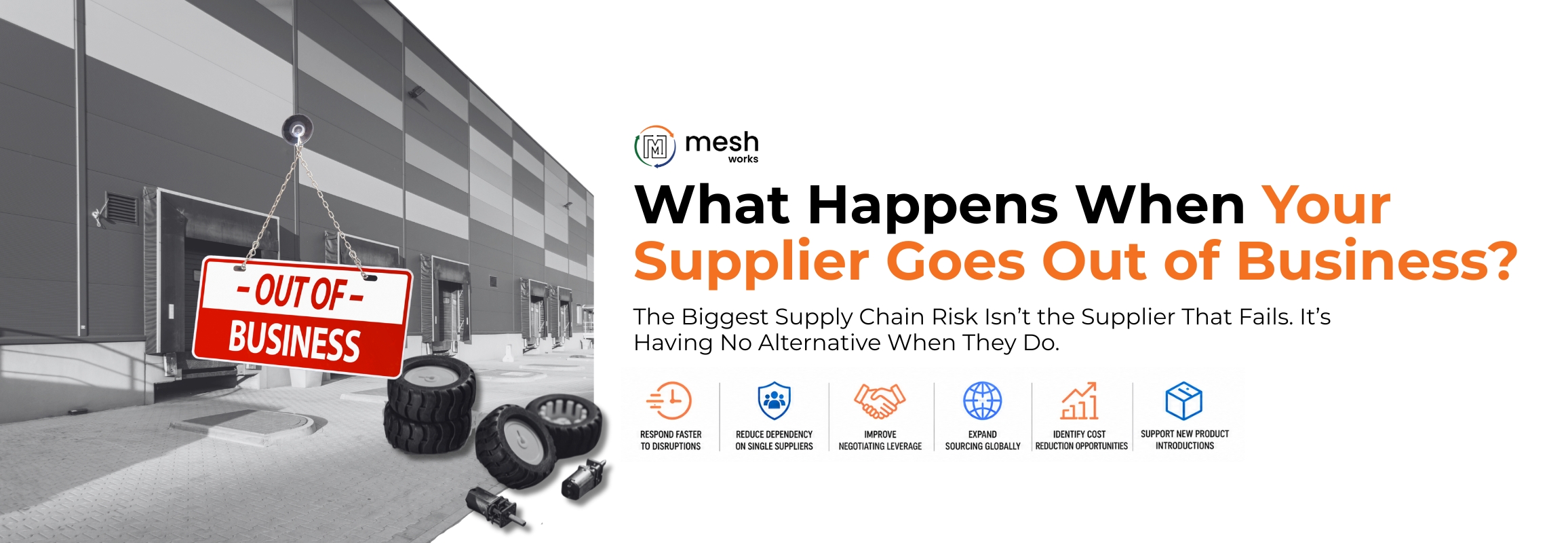

The call comes in on a Monday morning. A plant manager is asking why a critical component hasn’t arrived. You escalate internally. Someone checks the thread. It turns out the supplier went quiet two weeks ago — response times had been slipping for a month before that — and nobody flagged it because, well, it hadn’t become a problem yet.
Except it had. You just didn’t know.
This is the version of events most procurement leaders recognize. Not because their teams are careless or their suppliers are unreliable — but because the way procurement information flows inside most organizations is structurally designed to keep leadership in the dark until something breaks.
The result is a significant procurement visibility gap that prevents leaders from identifying supplier risks before they impact operations.
What directors see vs. what’s actually happening
Most procurement leaders have access to some version of the same data: spend reports, purchase order history, on-time delivery rates, maybe a supplier scorecard that gets updated quarterly. It’s clean, it’s formatted, and it tells you almost nothing about what’s going on right now.
Financial and ERP data is inherently a lagging indicator. By the time a supplier problem shows up in your on-time delivery numbers, you’ve already absorbed the damage. The delivery missed. The line stopped. The customer call happened. The data is just documentation of what went wrong — not a signal of what’s about to.
WHAT LEADERS TYPICALLY SEE | WHAT’S ACTUALLY HAPPENING |
Quarterly spend reports | RFQ response times slipping |
On-time delivery rates | Buyers chasing for 2+ weeks |
PO history & invoicing | Incomplete quotes coming back |
Annual supplier scorecards | Supplier contacts going quiet |
Escalations (already on fire) | Slow-burn issues nobody escalated |
The gap between those two columns is where supplier problems are born. And in most procurement organizations, nothing bridges it.
THE CORE PROBLEM: Leaders have dashboards. What they don’t have is signal. There’s a meaningful difference between data that reports on the past and intelligence that surfaces what’s happening right now — and most procurement technology only delivers the former.
Why qualitative signals never make it up the chain
It’s easy to look at this gap and conclude it’s a communication problem — if buyers just flagged issues earlier, if teams had better escalation norms, if there was a weekly standup where this came up. But that framing puts the burden on individuals to fix a structural failure, and it consistently doesn’t work.
Here’s what actually happens in practice.
A buyer notices that a supplier has been slow to respond on an active RFQ. It’s been five days since the last reply. They send a follow-up. Another three days pass. They send another. This is annoying, but it’s also just… normal. Suppliers get busy. Things get delayed. It usually resolves. Escalating this to a director would feel like overreacting — and the buyer knows it.
“Nobody wants to be the person who cried wolf. So by the time someone does escalate, it’s because they have no other choice.”
So the soft signal stays in the inbox. The slow response becomes a missed deadline. The missed deadline becomes an emergency. And the Director finds out when they’re already in damage-control mode, wondering why they’re always hearing about supplier problems after the fact.
The organizational silence around early-stage supplier issues isn’t dysfunction. It’s rational behavior inside a system that has no good mechanism for surfacing problems before they become fires. Buyers aren’t withholding — there’s simply nowhere to send a “this might become a problem” signal that anyone will act on.
WHY ESCALATION NORMS DON’T FIX THIS: Telling teams to “escalate earlier” shifts responsibility without solving the underlying problem. Without a system that captures and surfaces supplier behavior signals automatically, you’re asking humans to manually track and report qualitative data on top of an already full workload. It won’t happen consistently — and it shouldn’t have to.
The four early warning signs nobody is tracking
Supplier disruptions rarely arrive without warning. The warning signs just live in places that procurement organizations aren’t systematically looking.
01 Supplier response time degrading
Turnaround on RFQs and questions getting slower week over week. A supplier that used to respond in 24 hours now takes four days. Each instance feels minor. The trend is a signal.
02 Repeated clarification requests
A supplier that keeps asking the same types of questions — about specs they’ve sourced before, quantities they regularly handle — is showing you something. Capacity constraints, staff turnover, or attention spread too thin all look like this.
03 Quote incompleteness and pricing volatility
Missing fields on returned quotes, multiplying caveats, sudden pricing swings on parts they’ve quoted before. A supplier under financial or operational stress starts hedging before they tell you anything directly.
04 Communication tone and contact shifts
Shorter replies. Hand-offs to junior contacts. Your key contact stops being reachable. These are soft signals, but they’re often the earliest indicator that something has changed on the supplier’s side.
What these four signals have in common: they’re all qualitative, they all live in email and communication threads, and none of them appear in a spend report or OTD dashboard. They’re invisible to anyone not inside the specific conversation — which means they’re invisible to leadership almost by definition.
What real-time supplier visibility actually looks like
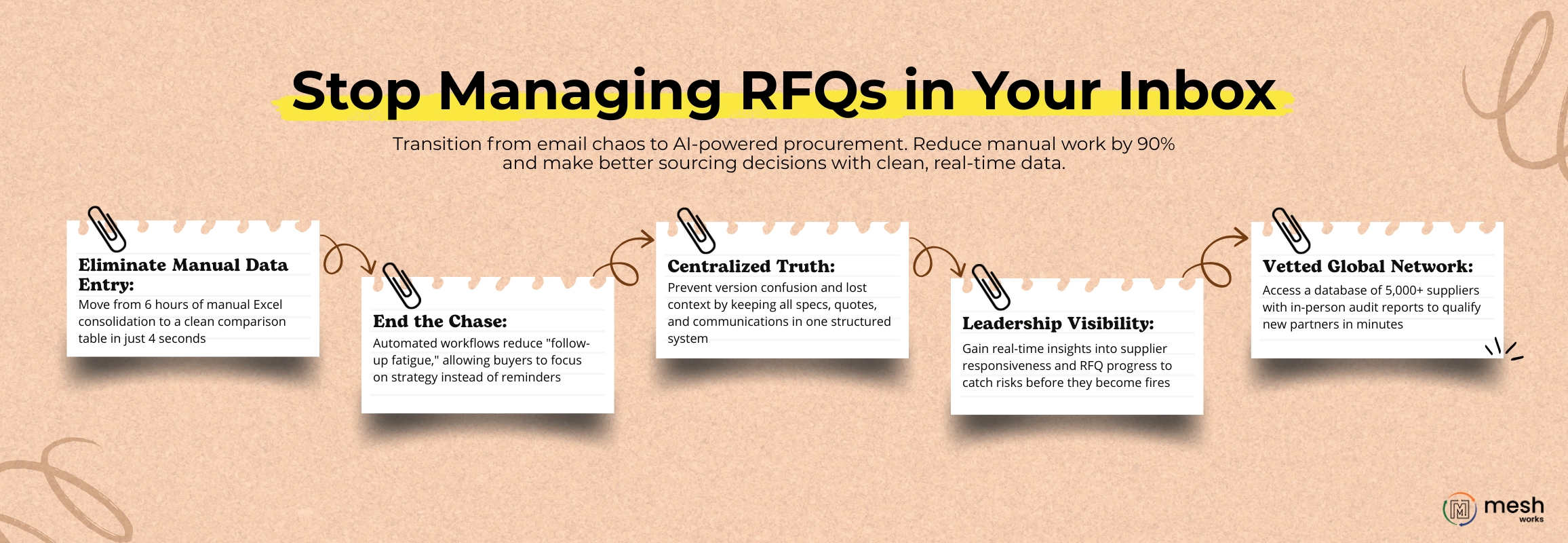
The instinct when solving visibility problems is to build another dashboard. More charts, more KPIs, another thing for the team to update before the monthly review. That’s not what procurement leaders actually need — and it’s not what fixes the problem.
What changes the game is intelligence layered on top of the workflows that already exist. Not a separate reporting layer that requires someone to manually populate it. A system that reads supplier behavior from the communication and RFQ activity that’s happening anyway — and surfaces patterns that humans would miss or not have time to notice.
In practice, that looks like a few specific things:
A responsiveness score built automatically from every supplier interaction — not entered by a buyer, just calculated from the data. A notification when a supplier hasn’t responded to an active RFQ in seven days. A flag when a quote comes back incomplete for the third time in a quarter. An alert when a supplier’s average response time has increased 40% over the past month.
None of these require a buyer to do anything differently. The signal surfaces to the right person — whether that’s the buyer managing the relationship or the director who needs situational awareness — without anyone having to decide whether something is worth escalating.
THE SHIFT IN PRACTICE: When a director has this kind of visibility, the dynamic with their team changes fundamentally. Instead of finding out about supplier problems during a crisis call, they can ask informed questions in a weekly check-in. Instead of reactive damage control, they can make proactive decisions: get a backup supplier qualified, accelerate a quote, have a direct conversation with a supplier’s leadership before a relationship deteriorates.
This isn’t about micromanaging buyers or second-guessing the team’s judgment. It’s about giving procurement leaders the same quality of real-time signal that their counterparts in sales and finance already have. A VP of Sales knows exactly where every deal stands. A CFO has live visibility into cash flow. A procurement director, managing supplier relationships that underpin the company’s ability to deliver — often knows less than either of them about what’s actually happening in their function right now.
That asymmetry isn’t inevitable. It’s a product of the tools the industry has settled for.
The smoke was there. You just couldn’t see it.
Every major supplier disruption has a history. There were signals — in email threads, in response patterns, in quote behavior — that something was shifting weeks before the crisis landed on a director’s desk. The problem isn’t that the signals don’t exist. It’s that no one built a system to surface them.
Procurement deserves the same visibility infrastructure that every other business-critical function takes for granted. Not more meetings, not more manual reporting, not more requests to “escalate earlier.” A system that works the way the function actually works — through communication, through RFQs, through the daily back-and-forth with suppliers — and that automatically elevates what matters to the people who need to act on it.
The companies that build this don’t just avoid more fires. They build supplier relationships that are genuinely better — because they’re managing them with accurate, timely information instead of guesswork and hindsight.
The smoke was always there. Now you can see it.
Assess Your Supply Chain Resilience
Supplier disruptions rarely happen without warning. The challenge is understanding where your organization is most exposed before a disruption occurs.
Use the Supply Chain Resiliency Calculator to evaluate your current risk profile and identify areas where additional supplier visibility and sourcing resilience may be needed.
➜ Calculate Your Supply Chain Resilience Score
➜ Book a Demo to See How MESH Works Helps Reduce Supplier Risk