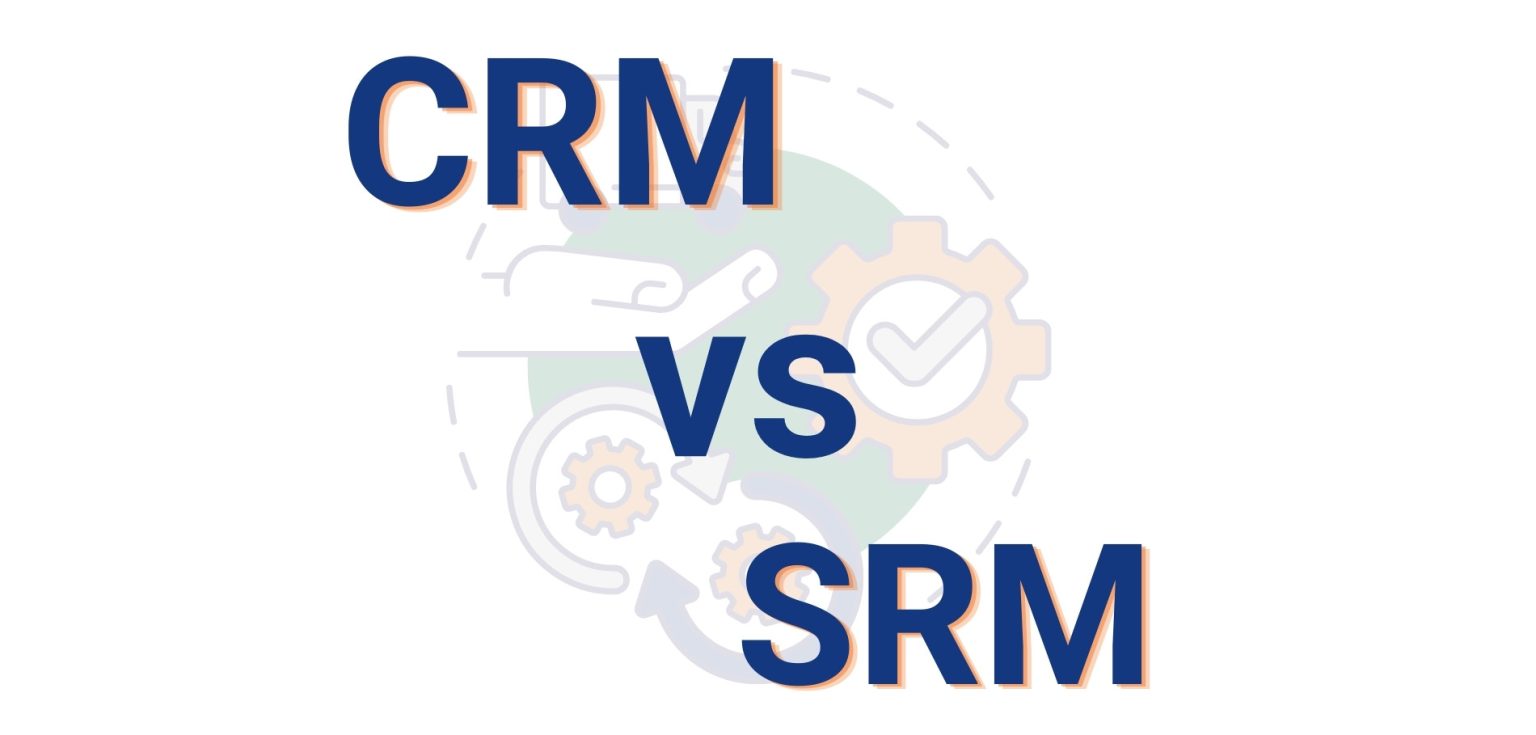
CRM vs SRM: What is the Difference?

MESH Works
CRM vs SRM: What is the Difference?

The History of CRM

The term “CRM” customer relationship management is now a commonly used term, and the emergence of companies like Salesforce CRM offerings have contributed both to its growth and popularity.

The origin of CRM dates to the 1980s; however it wasn’t even called a CRM. It was called a CMS, a contact management system that was a glorified contact book for all your customer’s information such as emails, locations, contacts, etc.

It wasn’t until the mid-1990s that CRM became a more widely accepted business system. This was also when salesforce automation (SFA) began to emerge because this was essentially automating all presale activities in conjunction with the contact information stored in the CMS.

This CRM boom in the late 1990s and early 2000s led to a highly diluted and over-saturated market. This forced CRM vendors to diversify product offerings and led to the creation of different suites for different departments involved in the sales relationship journey.

Over the last three decades, the CRM market size was valued at $41.93 billion in 2019, projected to reach $96.39 billion by 2027. 

Evolution of SRM

The term “SRM,” supplier relationship management, is still not nearly as well-known as CRM.

While many tools and technologies have been made available for the customer side of enterprises to manage sales, supplier management lacks advancement.

According to the Deloitte 2021 CPO Survey, about half the organizations are not using SRM tools for supplier collaboration. However, digital transformation is one of the most critical priorities among CPOs, so it’s just a matter of time before more organizations realize the value of adopting these types of systems.

Over the last few years, our industry has seen significant tariffs on global trade, pandemics, and war that have had global ripple effects.

If we have learned anything, we must be even more conscious of where we get our product from and how we get it. Supply Chains have been challenged over the last 2-3 years, but companies must find ways to understand, engage, track, and manage their supply bases.

The reality is that any company selling a finished good or product must devote attention and time to this problem that has been forced by macro-global issues entirely out of our control. 

Advancements in SRM

MESH SRM is a combination of 3 products that allow organizations to do everything across sourcing, purchasing, and procurement workflows:

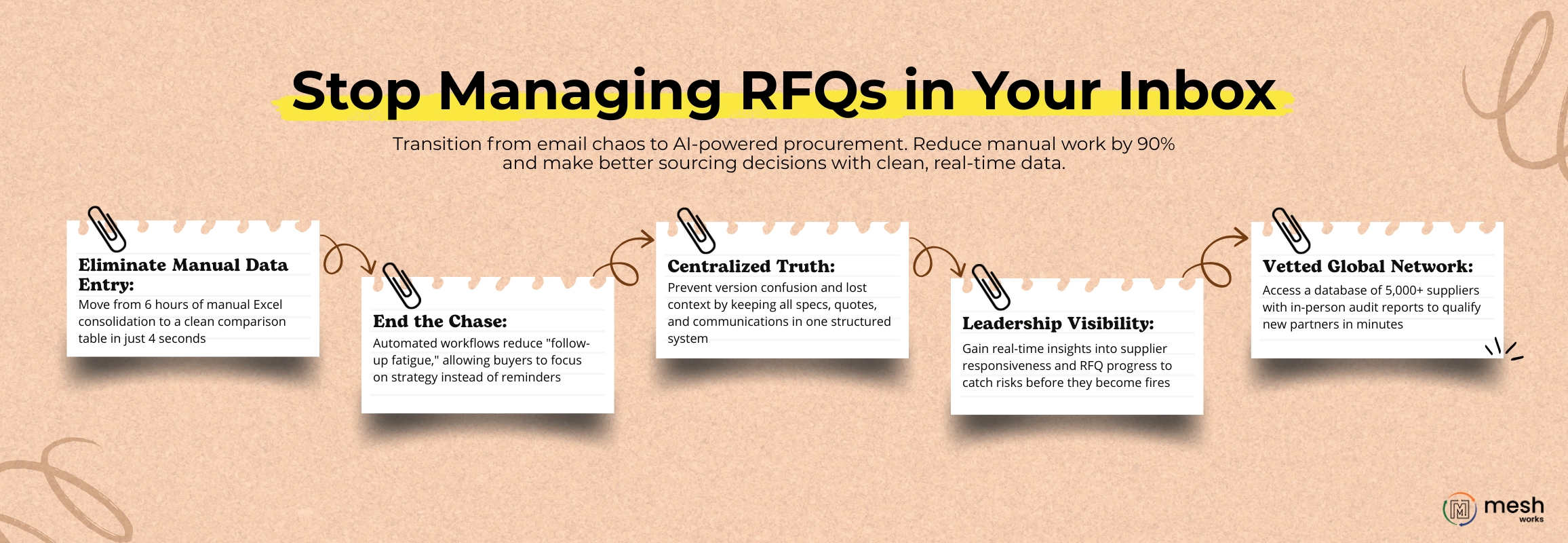
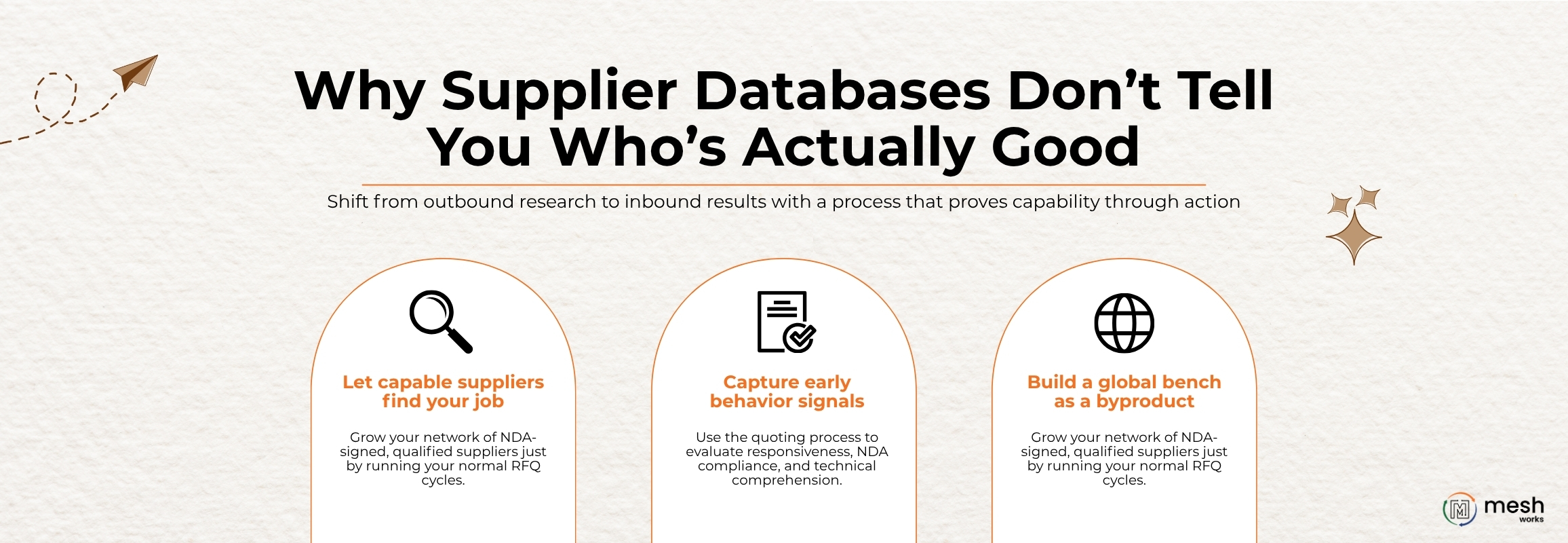
  1. MESH Sourcing: Find suppliers around the world across a range of manufacturing processes, materials, and commodities + qualifying suppliers through supplier profile which includes a 45-question sourcing audit, production capabilities, manufacturing equipment, factory photos & videos. MESH Audit is a global standard to evaluate a variety of manufacturing factories, processes, and technologies on one rating system.

  2. MESH RFQ: Engage in quoting activity with suppliers throughout the entire process, from creating and sending the RFQ, receiving supplier quotations, to comparing and awarding projects

  3. MESH Supplier Management: Allow organizations to manage ongoing supplier relationships – segment and classify suppliers while also tracking certifications, agreements, audits, and documents to maintain compliance 

Visit us to learn how MESH can digitize your supplier management, supplier compliance, RFQ, and quality management processes. 


References

SRM Is in for the Same Ride That CRM Took 10 Years Ago

Customer Relationship Management (CRM) Market Overview

Deloitte Global 2021 Chief Procurement Officer Survey

Frequently Asked Questions

Q 1. What is the main difference between CRM and SRM?

Ans. A CRM (Customer Relationship Management) system handles interactions with customers. It supports sales, marketing, and service teams. An SRM (Supplier Relationship Management) system manages relationships with suppliers. It helps organizations find better sources, negotiate well, ensure compliance, and oversee supplier performance.

Q 2. Why is SRM becoming as important as CRM for manufacturers?

Ans. Global supply chain disruptions, tariffs, pandemics, and geopolitical risks have shown companies that managing suppliers is as important as managing customers. SRM helps organizations monitor supplier capabilities, lower risk, ensure continuity, and build a strong supply chain.

Q 3. How did CRM evolve into the systems we use today?

Ans. CRM started in the 1980s as Contact Management Systems (CMS), which were basic digital address books. In the 1990s, it grew into complete Sales Force Automation (SFA) tools and eventually became multi-department CRM suites. Today, CRM is a global market worth over $90 billion, supporting marketing, sales, and customer service.

Q 4. Why hasn’t SRM evolved as fast as CRM?

Ans. Unlike customer-facing technologies, supplier management has stayed manual for decades. Many companies still use spreadsheets, email threads, and offline files. Only recently, due to global supply chain pressures, have organizations made digital SRM platforms a priority.

Q 5. What does a modern SRM platform include?

Ans. A complete SRM platform includes:

  • Supplier discovery and sourcing, which involves a global database, audits, and capabilities.

  • RFQ digitization, which covers quote creation, communication, comparison, and awarding.

  • Supplier management, which focuses on certifications, compliance, audits, documents, and segmentation.

MESH SRM combines all three, providing organizations with a full supplier lifecycle management system.

Q 6. How does MESH’s SRM differ from traditional procurement tools?

Ans. MESH combines sourcing, RFQ management, and supplier compliance in one portal. It includes:

- 45-question sourcing audits conducted onsite

- Factory photos, videos, equipment lists, and capabilities

- Quote comparison dashboards

- Certification tracking and compliance alerts

- Supplier segmentation by commodity, process, and geography

Traditional tools do not provide this level of supplier verification or manufacturing-specific workflow automation.

Q 7. Why do companies need SRM if they already use ERP?

Ans. ERPs manage transactions, not supplier relationships. They do not evaluate supplier capabilities, track audits, compare quotes, or visualize global sourcing options. An SRM adds strategic sourcing, compliance, and supplier monitoring tools, which complement ERP.

Q 8. Is SRM only for large organizations?

Ans. No. Small and midsize manufacturers now face the same supply chain risks as global OEMs. Affordable cloud-based SRM platforms like MESH SRM allow smaller companies to digitize sourcing, improve visibility, eliminate spreadsheet chaos, and reduce purchasing errors.

Q 9. How does MESH help reduce supply chain risk?

Ans. MESH offers verified supplier audits, visibility for global sourcing, monitoring of certifications, and tracking of supplier performance in real time. Companies can diversify their suppliers across different regions, prevent disruptions, and maintain business continuity, especially during times of geopolitical or market instability. By using the MESH platform along with tools like the Supply Chain Resilience Calculator, organizations can measure risk exposure, assess alternative sourcing options, and improve long-term resilience within their supplier network.

Q 10. How can I start using an SRM system like MESH?

Ans. You can check out MESH’s sourcing, RFQ, and supplier management tools in a demo or discovery call. The platform is made for manufacturing teams that want to digitize supplier workflows. It helps get rid of scattered spreadsheets and emails.

Procurement
You may also like