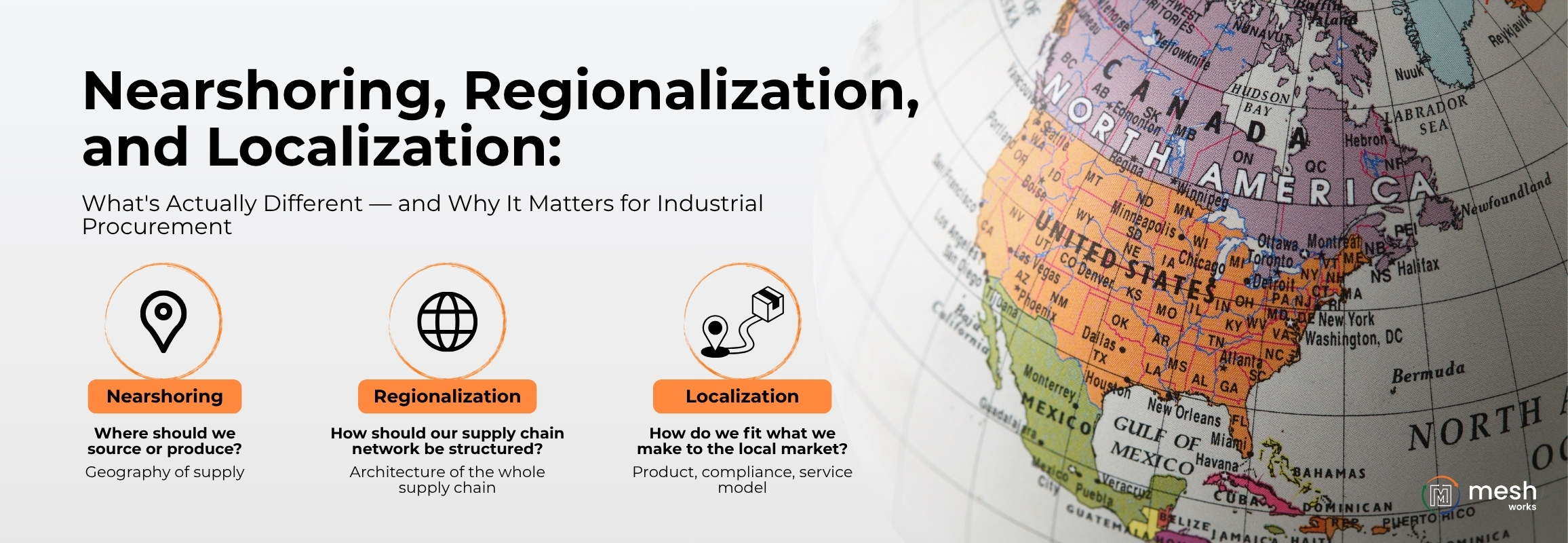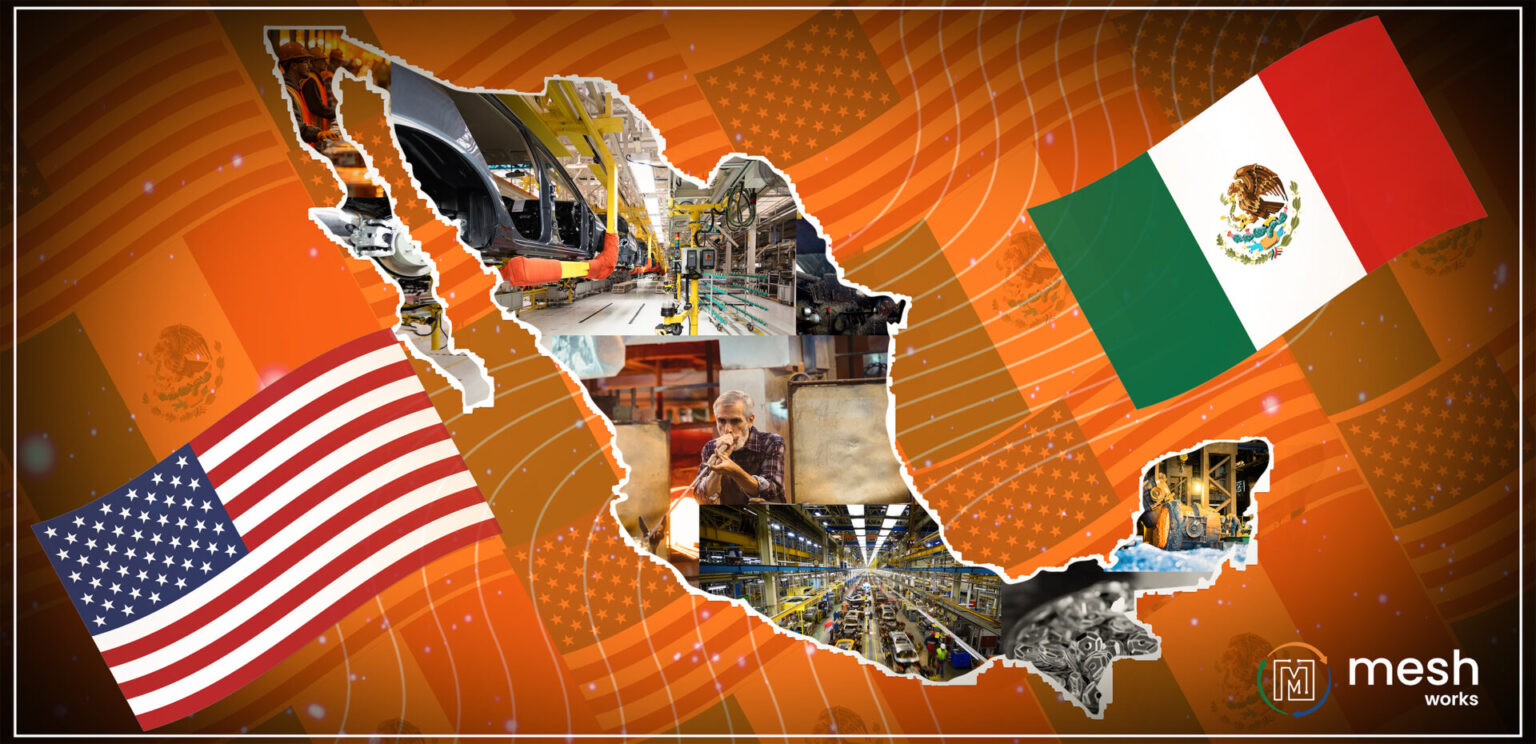
Nearshoring occurs when a buyer receives products from a supplier that is near the country in which their company is located. In the United States nearshoring would consist of obtaining products from either Mexico or Canada. The concept of nearshoring, particularly sourcing in Mexico, has been a topic regularly discussed on North American supply chain platforms. For example, it was recently released by Morgan Stanley that, “Mexican manufacturing exports (can increase) from $455 to $609 billion in the next five years.” This indicates that more companies based in the US, especially those in the automotive industry, are building relationships with suppliers closer to home.
The automotive industry is the biggest beneficiary, making up 35% of all nearshoring to Mexico in the first half of 2023, the largest percentage of any industry. A few other sectors are well suited for nearshoring, including the healthcare industry, electronics, and the manufacturing industry. With such a big increase and emphasis on nearshoring, companies need to weigh the pros and cons before making a change in supplier or production.
Advantages of Sourcing in Mexico
Cost Savings without Compromise: Sourcing from Mexico offers substantial cost savings without sacrificing quality. Labor costs are competitive compared to the United States and other outsourcing destinations. Another advantage is that nearshoring offers flexibility. If production is disrupted, it does not have as big of an impact on lead times, another benefit that could save a company money.
Highly Skilled Talent Pool: Mexico’s education system produces graduates with skills tailored to the global market, especially in technology, engineering, and business. For example, from 2015-2020 Mexico’s STEM programs increased by 30% and continue to increase today. In addition, over 130,000 students graduate with an engineering degree from Mexico every year. These data points indicate that professionals in Mexico are not only technically proficient but also adaptable to the dynamic demands of international projects.
Time Zone Alignment: Geographical proximity to the United States is advantageous, but the real benefit lies in overlapping time zones. Reduced inventory cost, travel times, and lead times. For example, if you are receiving a shipment from Mexico, but the port they typically come through is closed, they can travel through the Texas border to deliver the product.
Disadvantages of Sourcing in Mexico
Infrastructure and Logistics: While sourcing in Mexico has made significant progress, infrastructure and logistics can still be a challenge in certain areas. Companies must evaluate transportation networks, supply chains, and connectivity. One final point regarding infrastructure is that tier 2 and 3 supplier development is still rare in Mexico due to the initial development of suppliers in the area.
Legal and Regulatory Complexity: Navigating Mexico’s legal and regulatory landscape can be complex due to the number of regulations and requirements enforced by the country. Businesses need to understand tax laws, labor regulations, and compliance requirements.
Language and Cultural Differences: Although many professionals in Mexico are bilingual, language and cultural nuances can still impact communication. Companies planning to work with suppliers in any country different from theirs should invest in cross-cultural training and effective communication strategies.
How do we maximize the advantages?
After reviewing the advantages and disadvantages, MESH Works wanted to provide anyone planning to source from Mexico with a few tips on how to maximize the advantages discussed in the previous section.
Be open and transparent: As a company transitioning over to nearshoring make sure to have open communication with your supplier. This also means having appropriate expectations for what is realistically feasible for you and the supplier. For a few companies, this may be the first time working with a different supplier in decades. Therefore, it is critical that expectations are discussed early on during the development of the relationship.
Talent Management: Ensure that the supplier you are transitioning to has effective organization and leadership practices. This is because when a company has poor organization and leadership it results in high employee turnover. With the constant overturn of employees this can impact production and quality of service. Therefore, to mitigate this potential drawback we recommend vetting the supplier for leadership, organization, and communication skills.
Main Takeaways
At MESH Works, we constantly weigh the advantages and disadvantages of offshoring versus nearshoring for our clients. That is why our cloud-based database assists with finding suppliers that assist companies in making the most educated decision before making a transition to a new supplier. With over 3,100 suppliers assessed on our database, we can provide statistics, information, and references that may be influential in helping companies discover new, qualified, trusted suppliers. For example, here are some of the capabilities our 160 Mexico suppliers have: 87 of them have the capability of producing aluminum, 42 have the capability of producing die-casted materials, and 10 can do stamping.
Although there are 160 suppliers in Mexico there are even more in other countries. According to MESH Works’ sourcing database, India offers over 1160 suppliers, Vietnam offers 653, and China has 791. Our point is that nearshoring for key suppliers and high-running parts can be a strategy, but not all can be accomplished in Mexico with the current capabilities & constraints. Your company can consider this, compare suppliers, and weigh the advantages and disadvantages of nearshoring by scheduling a demo call today with one of our seasoned supply chain professionals.
References
The potential of nearshoring in North America: The case of Mexico | Brookings
11 Benefits of Nearshoring: Why You Should Choose Nearshoring | Xometry
Maximizing The Benefits Of Nearshoring: Four Key Strategies For Success (forbes.com)
Mexico Labor Force | Increase Manufacturing w/ Skilled Mexican Workforce (ivemsa.com)
Graduates by field of education (oecd.org)
In the race for tech talent, the US should look to Mexico | TechCrunch